Showing posts with label Danny Devito. Show all posts

Monday, September 27, 2010

The Gorrilla and The Butterfly: a guide to good villains Part 2


                     He ran one of Europe's biggest car companies.  His round, pock-marked face would be so close you could see what he'd had for lunch. He would scream, at you, his thoughts incoming from all directions, his face getting redder and redder.  He was a client, a gorilla with the flight path of a butterfly. And god help you and all the people who worked for the agency if you lost track of his tirade.  He suffered from terrible indigestion. And was kind to his invalid wife.
                      The best villains are full of contradictions.  From their point of view they are the only truly fair and balanced voice in the room.  Here's part two of Dickie Laffer, a character from my novel, The Candle.
                     (Part three of Dickie Laffer-- as played by Dustin Hoffman or Danny Devito, and the Judd guide to good villains, tomorrow.)

 from chapter 34:

  Dickie picked up his white porcelain coffee cup, thought better of it and carefully put it back down.  “You’re right there, Darlin. Atonement has a nice sound to it.  Biblical. Daniel lying down with the lions.  But I gotta tell you if I did unto others as they would like to do unto me, I’d need a bazooka and a machete.  What kinda grace are you talking about, giving money away?”
                           “Oh, Dickie.  It’s not about money.  I see you drinking that awful pink Pepto Dismal for breakfast, and I know you are suffering.  Why should you suffer?”
                            “Well, I’ve got a lot to deal with this week.”
                            There was a thump on the glass door behind Darlene as a small wren flew into it and fell to the flagstones. “You’ve always got a lot to deal with, Dickie. That’s what makes you the big guy.”  Darlene turned to watch the tiny bird shake itself, take two hops and launch into a dizzy flutter across the yard and into the dark green camouflage of trees.
                       “This is different, Darlin’. I was counting on that goddamn creative agency in New York, Fararly, Faucett, and so on, to turn us around. But that bastard Josh Fararly, after I had lunch with him in New York, calls up yesterday and says they are gonna bail.” 
                         Dickie Laffer pushed back his tall oak chair and started pacing the room.  A strikingly short man, his head was just above the table top.  “He says he’s worried he if he takes on Beefalo he might lose all their Quaker accounts because Quaker owns Burger King.  So the hot agency is gone and If I don’t have something that’s got the horsepower to  turn us around our whole deal is going to gonna nosedive.  We go belly up, you and I  won’t be donating to charity, we’ll be asking for it.   I’ve already got a bunch of franchise guys saying they want to re-negotiate or get out.  They get out, they’ll go to McDonalds  and the current Mrs. Kroc is gonna have a lot more money to give away.”
                    “Oh, fooey, you’ll sort it out, Dickie.  You always do.  I’m trying to tell you, it’s your being so hard on everybody else that’s so hard on you.  Surprise somebody.  Be nice to them.”
                 “Somebody  bring me a new idea, Darlin, I’ll love em to death.”      
                   She bent forward for her coffee, her robe gaping open the way it did sometimes and it just thrilled him. “Be nice to someone, Dickie,” she said, picking up her cup and sipping.  “See if it doesn’t take the edge off your diarrhea.”

Friday, September 24, 2010

After Mad Men: Dickie and Darlene Have Breakfast

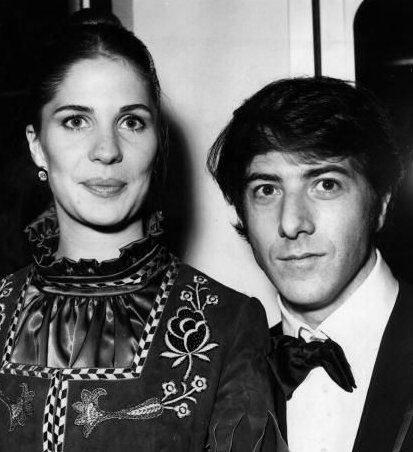
The Devil always has the best lines.  And real villains will steal the show.   Dickie Laffer showed up on the page and took over the show in my book, The Candle, about advertising in the 1970s.  Everybody thought Danny Devito would be perfect in the role.  But I always pictured a bald Dustin Hoffman with Dickie's eyebrows.  His first wife, Anne Byrne Hoffman authored a coffee table book on the beauty of basketball players, shortly before their divorce.  An especially cruel joke on her famously short husband.


chapter thirty five


               “Joan Kroc is giving away five million dollars to an alcoholic treatment center.” Darlene looked up from her Omaha World Herald. “Drink all of it.  The doctor said, drink all of it.”
                           Dickie Laffer looked at the half empty glass of chalky pink goo with distaste.  “Well, what the hell,  I’m going to need it.”  Dickie raised the glass of pink fluid and drained it.  Thinking, as he always did, of the irony it, that the CEO and owner of 29.8 % of the world’s third largest rapid service restaurant chain had to drink the dismal Pepto Bismol for breakfast.  To soothe the tightly coiled dragon of his inflamed digestive tract.  For, as the label said, rapid relief from heartburn, upset stomach, indigestion, and diarrhea.  Dickie’s world class eyebrows rose and fell.  A noticeable event.  Dickie was bald and it looked like all the hair on top of his head had migrated to his eyebrows. 
                    “You have a pink mustache.  Don’t you think it’s a good idea?”
                     Dickie wiped the pink bismuth subsalicylate frosting from his upper lip.  Stuff didn’t work very well, but it worked better than anything else he’d tried.  Dickie’s round, owl like face frowned and his long thick and wirey eyebrows joined in the middle of his forehead to make one long unbroken line of coiled wire as he conjured up a Laffer alcoholic clinic in some corn field outside Omaha: wooden benches against concrete walls, prisoners in grey pajamas drinking water from a ladle and a wooden bucket. “We don’t need an alcoholic clinic in Omaha, Darlin.”
                      The Laffer breakfast room was paneled in oak, and the table was a fine cherry  antique that some ancestor of Darlene’s had left behind  rather than try to stuff it into a Conestoga and carry further west.  The table, with its worn and rounded edges made a calm background for the white Wedgwood china plates and cups and saucers, for the solid silver knives and forks and spoons.  Among the many things Dickie admired in Darlene was her elegant taste.  The early morning sun streaming in from the tall glass doors leading to the garden washed the room with honey.  Tall oak and maple trees ringed their half acre of lawn bordered by red, yellow and pink roses, zinnias, geraniums and hopeful bunches of daisies.  The garden was serene in the early warm gold of the morning.  You had to look twice to see the stumps of oak limbs that had been twisted and fractured by the great tornado that had turned a wide swath of Omaha into a bombed ruin last May.   
               “I don’t mean for an alcohol clinic, Dickie. I mean for atonement.”
               “That bastard Kroc has a lot to atone for.”
               “Atonement for us.”
               “For us?  What the hell have we got to atone for?  It’s 6:15 AM, most folks in this neighborhood are still sound asleep. I’m about to put in my usual ball breaker day, kicking ass and chewing butt, and at the end of it, I’m still going to be number three.”
                     “Say the word.”
                      “Atonement,” he said. 
                      “Doesn’t it have a nice round sound?”
                     “Last week Ray Kroc said that if he heard I was drowning he would turn on his garden hose full blast and stuff it down my throat.  Kroc is the guy that should be making those nice round atonement sounds, Darlene.  I am just trying to make a living.”
                         Darlene was blonde and going grey.  She didn’t mind.  She wore her hair the same way she wore it when she was eight years old, in a page boy, when she first met Dickie.  She was a large, soft looking woman and Dickie would be the first to tell you she was the brains of the Laffers.  She wore her blue silk robe that she had worn for years.  It suited her in the morning in this sunny room.  The robe was cornflower blue, the same color as her eyes. “Your kids and my Lily are all grown up.  We have the nicest house in Fairacres. There isn’t a nicer house or a better place to live in Omaha.  We don’t need more money.  We need more grace,” she said.
                   Dickie and Darlene  had gone to the same grade school in Lincoln, Nebraska where Darlene’s dad taught geology at the University.  Dickie’s dad worked on the railroad.  They knew each other but they never dated.  She was way out of his league, too pretty, too smart.  He was short, and suffered from volcanic acne. She dated the quarterback.
                    Dickie married a short, curly haired bundle of nerves who loved small dogs.    They met in St. Louis when he started out as a salesman for Proctor and Gamble and she was the assistant to the marketing manager on Pampers.   The night they were married she said she “wanted it all.”  All, it turned out, did not include sex except at verbal gunpoint.  They had two kids which she kept when she left him for the Clairol marketing manager. 
                  When Dickie met Darlene ten years later, he was the Chief of Operations for Beefalo.  Darlene was recently divorced from her first husband, Rupert, a wide, blonde, mid-western stockbroker who did not value a wife who was smarter than he was.  The stockbroker had affairs with his secretaries.  Darlene just let him go, took little Lily age 9, and left for Omaha because she knew she could work in any insurance company she wanted because she could speed read actuarial tables.  Her Country Squire wagon was stuck on an icy patch in the Bakers Supermarket just off Cornhusker. Dickie had come down to Belleville to check out the Beefalo across the street, see if it was as spotless and friendly as every Beefalo Franchise had to be.  Dickie was going to park in the Bakers lot so the Beefalo manager wouldn’t see him coming.  And there was this Ford station wagon “waggin its damn tail on the ice,” as he liked to tell the story. Dickie bounced out of his rolling Greek temple, a white, gold vinyl-top, Lincoln (tasteful gold DL initials, and a red and yellow Beefalo decal centered under the door window)  to help.
                    Darlene stuck her head out her window, her nose rose red and drooling with a cold.  Dickie recognized her in that first instant and said, “Darlin.”
                   “It’s Darlene,” she said. 
                  “You’ll always be Darlin to me.”  Dickie answered.  Truest words he ever spoke.

                        (to be continued)